
Becoming a parent is one of the most fulfilling experiences in life. Yet, many couples today find that the timing just isn’t right. Career goals, health conditions, personal aspirations, or even social circumstances often lead individuals to delay starting a family.
Unfortunately, fertility doesn’t wait. As age increases, egg and sperm quality gradually decline. This is where fertility preservation steps in — offering the freedom to plan parenthood on your terms without compromising your biological clock.
At Trinity Women Hospital & IVF Center in Ahmedabad, we specialize in fertility treatments that empower men and women to take control of their reproductive health. Our fertility preservation programs combine medical expertise with compassion, ensuring every patient feels supported at every stage of their journey.
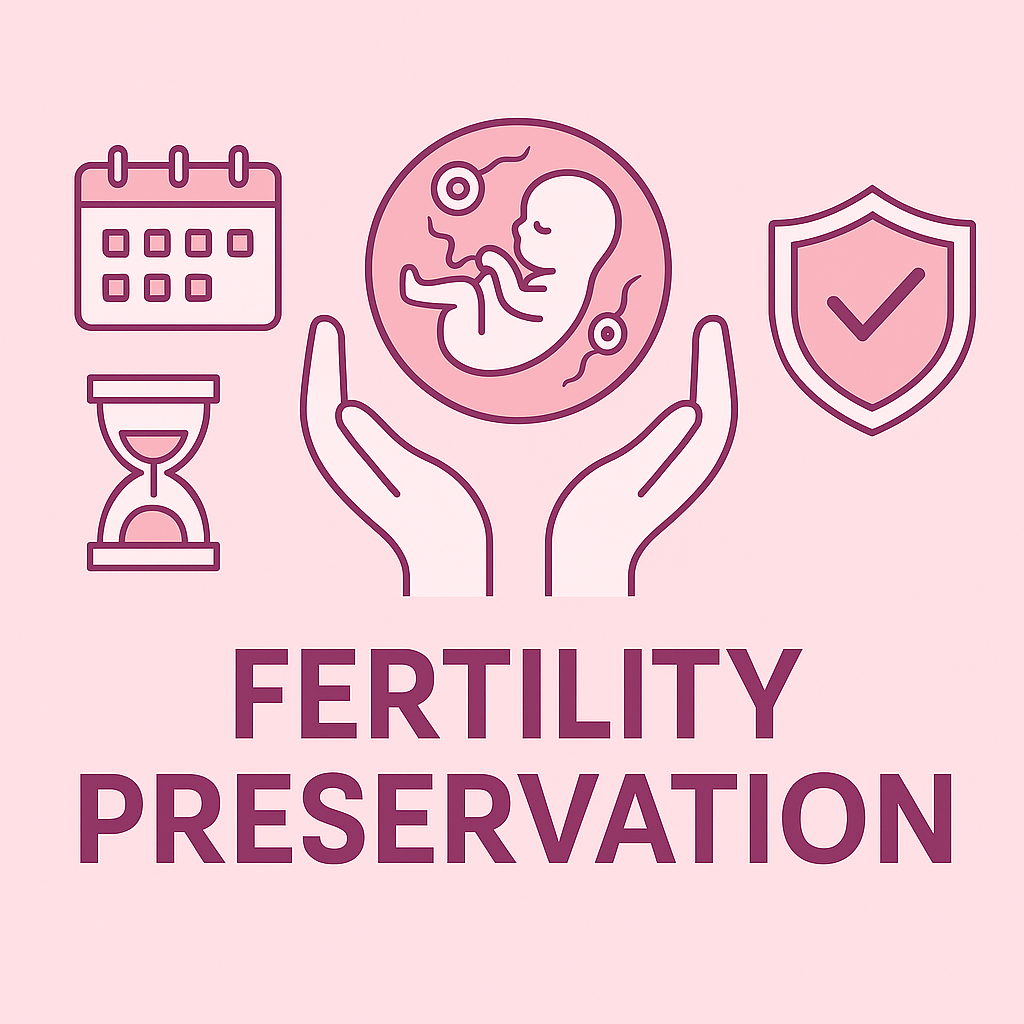
What is Fertility Preservation?
Fertility preservation refers to a range of medical procedures that allow men and women to save their eggs, sperm, or embryos for future use. This means if your fertility declines later due to age, medical treatment, or lifestyle factors, you can still have biological children using your preserved reproductive cells.
At Trinity Women Hospital & IVF Center, we use advanced cryopreservation techniques to freeze eggs, sperm, and embryos without damaging their quality. Whether you’re planning pregnancy later, facing a medical condition, or simply want to keep your options open, fertility preservation is one of the most reliable fertility treatments available today.
Why Fertility Preservation Matters
Fertility naturally declines with time. For women, the decline starts after age 30 and becomes faster after 35. Men may produce sperm throughout life, but sperm quality and motility decrease with age too.
Medical conditions like PCOS, endometriosis, cancer, or certain autoimmune disorders can also affect fertility. Treatments like chemotherapy or radiation can damage eggs or sperm permanently. That’s why preserving fertility early is a wise and proactive choice.
At Trinity Women Hospital & IVF Center, we believe fertility preservation isn’t just about freezing cells—it’s about preserving hope, possibilities, and future dreams of parenthood.
Types of Fertility Preservation Offered at Trinity Women Hospital & IVF Center
1. Egg Freezing (Oocyte Cryopreservation)
This is a safe and effective method for women who want to delay pregnancy. Fertility medications stimulate the ovaries to produce multiple eggs, which are then collected and frozen using advanced vitrification. These eggs can later be thawed, fertilized, and used in IVF when you’re ready to conceive.
2. Sperm Freezing (Semen Cryopreservation)
For men, sperm freezing is simple and quick. A semen sample is collected and analyzed for quality before being frozen for future use. This is ideal for men planning cancer treatments, surgeries, or those who want to secure fertility before marriage or older age.
3. Embryo Freezing
Couples undergoing IVF can choose to freeze embryos created from their eggs and sperm. This provides the option to try for pregnancy later without repeating the full IVF cycle. Embryo freezing has a very high success rate when performed under the expert care of Trinity Women Hospital & IVF Center.
4. Ovarian Tissue Freezing
For women who cannot delay urgent medical treatments like chemotherapy, a small portion of the ovary is removed and frozen. Later, it can be transplanted back to restore fertility naturally.
5. Testicular Tissue Freezing
In cases where sperm production is low or absent (such as in young boys undergoing cancer treatment), testicular tissue freezing helps preserve fertility for future use.
Emotional and Practical Benefits
Fertility preservation is more than a medical treatment—it’s a reassurance of possibilities. Many women at Trinity Women Hospital & IVF Center share how they feel relieved and empowered after freezing their eggs or embryos. They no longer feel pressured by age or timelines.
It’s not just about postponing pregnancy—it’s about taking control. Whether or not you use your frozen eggs or sperm later, the act of preservation offers emotional peace. It allows you to focus on your career, health, or healing without worrying about losing your chance at biological parenthood.
Preserving fertility today can also reduce the need for multiple fertility treatments in the future. Younger, healthier eggs and sperm increase IVF success rates later and may save you time, stress, and costs down the line.
When Should You Consider Fertility Preservation?
Fertility preservation is suitable for both men and women in many situations, such as:
- Women aged 25–35 who wish to delay pregnancy
- Cancer patients about to undergo chemotherapy or radiation
- Men with low sperm count or poor sperm motility
- Couples not ready for children yet but want biological options later
- Transgender individuals planning gender transition treatments
- Women with family history of early menopause
At Trinity Women Hospital & IVF Center, our fertility experts assess every case personally and guide you on the best fertility treatments for your situation.
How Trinity Women Hospital & IVF Center Helps You
Our fertility preservation program is built on three pillars: Science, Safety, and Support.
- Science: We use cutting-edge technology such as vitrification and cryogenic storage to maintain cell health for years.
- Safety: Every egg, sperm, or embryo is stored under secure, monitored conditions with strict quality control.
- Support: Our fertility specialists, embryologists, and counselors work closely with each patient, providing guidance and emotional care at every step.
We believe that everyone deserves the chance to become a parent when the time feels right. With Trinity Women Hospital & IVF Center, that chance is always within reach.
FAQs | Fertility Preservation
Q1. What is the ideal age for fertility preservation?
The best age for fertility preservation is before 35 for women and before 40 for men. Younger eggs and sperm have higher chances of leading to a healthy pregnancy later. However, it’s never too late to explore your options.
At Trinity Women Hospital & IVF Center, our fertility specialists conduct detailed assessments to help you decide the right time and approach. Even women in their late 30s can benefit from preservation, depending on their ovarian reserve and health condition.
Q2. Is fertility preservation safe?
Yes. Fertility preservation is a completely safe and widely practiced medical procedure. Techniques like egg freezing, sperm freezing, and embryo storage have been used globally for decades with proven results.
At Trinity Women Hospital & IVF Center, we follow international standards of laboratory safety and patient care. The procedures are non-invasive or minimally invasive, with no long-term risks to fertility or overall health. Many parents today have healthy children through eggs or sperm frozen years earlier.
Q3. How long can eggs, sperm, or embryos be stored?
With modern vitrification techniques, eggs, sperm, and embryos can be stored safely for 10–20 years or even longer without losing quality. The key factor that matters most is the age at which they were preserved, not the duration of storage.
At Trinity Women Hospital & IVF Center, our advanced cryostorage systems maintain a constant ultra-low temperature and are monitored 24/7 to ensure safety. You can choose to extend your storage period annually as per your family planning needs.
Q4. Can fertility preservation guarantee a future pregnancy?
While fertility preservation doesn’t guarantee pregnancy, it significantly increases the chances of conception when done at the right time. Success depends on factors like egg/sperm quality, the woman’s age, and overall health at the time of use.
At Trinity Women Hospital & IVF Center, we also combine fertility preservation with other advanced fertility treatments such as IVF, ICSI, and embryo testing (PGT-A) to maximize your success. Many of our patients have achieved healthy pregnancies years after preservation
Q5. Can cancer patients or those with medical conditions undergo fertility preservation?
Absolutely. In fact, fertility preservation is especially recommended for cancer patients and those undergoing treatments that can damage reproductive cells, such as chemotherapy or radiation.
Before starting medical therapy, Trinity Women Hospital & IVF Center works closely with oncologists and specialists to plan safe and fast fertility preservation. For women, eggs or embryos can be frozen before treatment. For men, sperm can be collected and stored. This ensures their future parenthood remains possible, even after recovery.
Conclusion
Fertility preservation gives you the freedom to plan parenthood on your own timeline. Whether it’s for personal reasons, career goals, or medical protection, it’s one of the most empowering fertility treatments available today.
At Trinity Women Hospital & IVF Center, Ahmedabad, we’ve helped countless men and women secure their fertility safely and confidently. With world-class technology, compassionate care, and complete transparency, we ensure your fertility journey is comfortable and successful.
Your fertility is your power—preserve it today, for a brighter tomorrow.